
About Joseph’s Well Official Website
We scanned josephwell.com for several indicators and think buyers should read closely before ordering.
Checkout runs through ClickBank via a dedicated payment subdomain, which gives buyers ClickBank’s standard retailer protections. That said, the page itself raises a few real concerns. The site’s footer and disclaimer text mix references to three different retailers, ClickBank, BuyGoods, and Digistore24, in the same block of legal copy, along with leftover Arabic-language testimonial disclaimers referencing an unrelated weight-loss supplement called “SeroBurn,” plus an “ingredients” popup image that has nothing to do with a water device. This is a strong sign the sales page was built on a recycled funnel template originally used for a different product, rather than one built specifically for Joseph’s Well.
The site also discloses upfront that “John Gilmore,” the name attached to the product’s origin story, is a pen name used “for storytelling and privacy purposes.” The marketing leans heavily on religious and apocalyptic framing (“the next seal breaks,” “God-sent device,” inspired by “the deserts of Israel”), which is a common urgency tactic in this corner of the affiliate market.
| Positive Reviews | Negative Reviews |
|---|---|
| Checkout runs through ClickBank, giving buyers standardized refund protection | Sales page contains leftover content from an unrelated supplement funnel (SeroBurn/ProstaBiome references) |
| 60-day money-back guarantee reported across multiple independent reviews | Legal footer references three different retailers (ClickBank, BuyGoods, Digistore24) in the same disclaimer block |
| Underlying atmospheric water generation technology is real and well-documented | The site discloses its author name is a pen name |
| Both grid-powered and solar-powered build options are included | Marketing relies on apocalyptic, fear-based religious framing |
I’ve looked at a lot of “off-grid survival” offers, and Joseph’s Well is one of the more talked-about ones in the prepper and DIY water space right now. It’s sold as a blueprint for building a device that pulls drinking water out of the air, with some landing pages also offering a pre-built physical unit. But between a recycled sales template and inconsistent output claims across different versions of the page, it’s worth separating the marketing from what the product actually is.
Is Joseph’s Well legit? This analysis looks at what you actually get, how the underlying technology works, and what independent reviewers report after trying it.
What is Joseph’s Well?
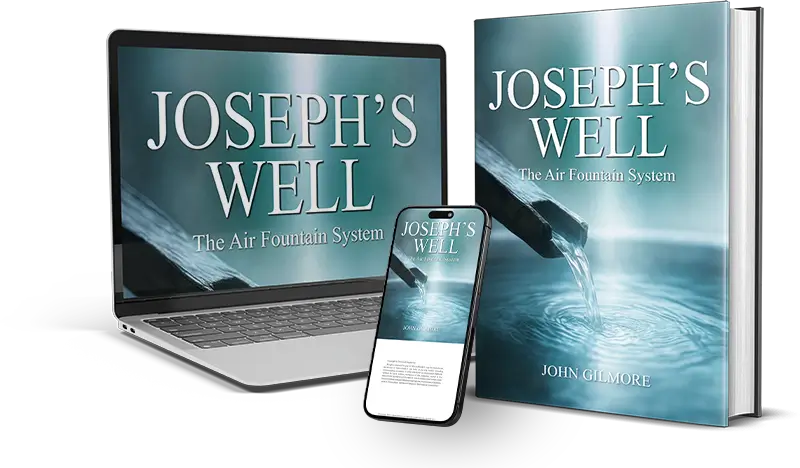
Joseph’s Well is sold primarily as a digital DIY blueprint and video training series teaching buyers how to build an atmospheric water generator, a device that condenses moisture out of humid air into drinkable water. Some landing pages also offer a ready-made physical unit as a higher-priced bundle option.
Independent reviews consistently describe the core digital product as a one-time purchase around $39, with parts to build the device separately sourced for an additional $80 to $250 depending on where you buy them. The official site itself markets bundled physical units at higher price points ($49 to $79 per unit depending on quantity).
- Format: Digital blueprint, video training, and materials list (core offer); optional pre-built physical unit on some pages
- Claimed Output: Reported inconsistently across sources as either “40 gallons a day” (official site) or “50 gallons a day” (some third-party reviews)
- Power Options: Grid-powered or solar-powered builds
What’s Inside Joseph’s Well
Based on independent reviews and the official site, the program includes:
- Step-by-Step Blueprints – plans for assembling the atmospheric water generator from sourced parts
- Video Training Series – instructional walkthroughs for the build process
- Materials List – a shopping list of parts, sourced separately from the guide itself
- Grid and Solar Build Options – instructions for both a mains-powered and an off-grid solar setup
The core technology, atmospheric water generation, is a real and established method used in both commercial dehumidifier-style units and larger industrial systems. The question isn’t whether the science is real, it’s whether a home DIY build can realistically hit the output numbers claimed on the sales page.
How Joseph’s Well Works
Atmospheric water generation works by cooling air below its dew point so moisture condenses out of it, similar to how a dehumidifier collects water, then filtering that condensate into drinking water.
Key factors that determine real-world performance:
- Humidity Dependence: Independent reviewers consistently note the system performs far better in humid climates (Florida, the Pacific Northwest) than in dry ones (Arizona, Nevada), since there’s simply less moisture in the air to extract.
- Power Draw: Both grid and solar builds are offered, but solar setups typically produce less consistent output since they depend on available sunlight and battery capacity.
- Scale Limitations: Commercial atmospheric water generators capable of 40-50 gallons a day typically require significant power and equipment size; a home DIY build at this price point is unlikely to match that output reliably in most conditions.
Joseph’s Well Benefits
Based on the official site and independent reviews, the main advantages reported are:
- Off-Grid Water Independence – reduces reliance on municipal water or stored supplies during emergencies
- Low Entry Cost – the digital blueprint itself is inexpensive compared to commercial atmospheric water generators
- Solar Compatibility – can be built to run off-grid without mains power
- Refund Window – a 60-day money-back guarantee is reported across multiple independent reviews
Joseph’s Well Cons
Before buying, there are real concerns worth weighing.
- Recycled Sales Funnel: the official page contains leftover disclaimer text and imagery from an unrelated supplement product, a strong sign of a templated, mass-produced sales page rather than one custom-built for this product.
- Inconsistent Output Claims: the official site claims 40 gallons a day while some independent reviews cite 50 gallons a day, and neither figure is independently verified.
- Heavy Humidity Dependence: performance drops significantly in dry climates, which isn’t emphasized on the main sales page.
- Unclear Total Cost: the $39 digital guide requires separately sourced parts costing an estimated $80-$250, meaning the advertised price isn’t the full cost of building a working unit.
- Pen Name Disclosure: the site’s own disclaimer admits the named author isn’t a real identity.
- Astroturfed Promotion: near-identical promotional “reviews” for this product have been posted on unrelated community forums (including a QuickBooks feedback forum), a pattern consistent with spam marketing rather than organic reviews.
Is Joseph’s Well a Scam?
The question of whether Joseph’s Well is legit depends on what you’re expecting to receive. My research shows a real, ClickBank-backed digital product built on legitimate underlying technology, not a fabricated or non-delivering offer.
Red flags worth noting:
- Sales page built on a recycled funnel template from an unrelated product
- Inconsistent water-output claims across official and third-party sources
- Total build cost is understated on the main sales page
- Promotional content posted on unrelated forums in a spam-like pattern
On the other hand, checkout runs through ClickBank’s standardized refund system, the core atmospheric water generation technology is scientifically legitimate, and a 60-day guarantee gives buyers a way to test it with limited risk.
My verdict? Joseph’s Well isn’t a fabricated scam, the technology behind it is real, but the marketing overstates what a home DIY build can realistically deliver, especially outside humid climates, and the recycled sales funnel is a real trust concern. Go in with tempered expectations and keep your refund window in mind.
Conclusion
Looking at Joseph’s Well overall, it’s a digital blueprint for a legitimate category of water technology, sold through an established payment platform with a refund window. It isn’t a fake or empty product.
Its biggest weaknesses are a sales page that shows clear signs of being recycled from an unrelated funnel, inconsistent output claims, and marketing that doesn’t emphasize how much performance depends on local humidity.
So is Joseph’s Well legit? It’s a real product built on real science, but “40-50 gallons a day” is an optimistic ceiling, not a typical result, especially in dry climates. Treat it as a low-cost DIY project rather than a guaranteed water solution.
Before you buy, budget for the additional parts cost beyond the guide price, and check your local humidity levels against what independent reviewers report.