
About Divine Invocation Code Official Website
We scanned divineinvocationcode.com directly, and the clearest finding comes straight from the site’s own footer, not from any outside source: it states in two places, “ALL NAMES ARE PEN NAMES. FOR ENTERTAINMENT PURPOSES ONLY.” That’s the seller’s own legal classification of the product, not a critique from this review.
As with the prayer-themed product reviewed earlier in this series, it’s worth separating the commercial marketing from the subject of faith itself. The page opens with a real Bible verse (Proverbs 3:5-6) and later references the parable of the talents, genuine religious content, wrapped around a $67 offer (marked down from a stated “$149 value”) built on a “77-letter invocation.” Third-party marketing for the same product describes that invocation as “a secret known exclusively to the Hebrew community and Kabbalah mystics,” an attribution to a specific real religious tradition that isn’t sourced or verifiable anywhere on the page itself.
The claimed track record, “a transformation enjoyed by over 12,700 individuals,” is a specific-sounding but unverifiable number, and third-party pricing for the same product doesn’t even agree with itself: some sources cite a “$129 to $37” discount, others describe a different bonus value than what’s listed on the official page. We also found the identical review article, word for word, republished across at least five separate Medium.com posts by the same account, and near-duplicate content uploaded as PDFs to unrelated university and nonprofit file servers, a pattern consistent with mass-produced spam content rather than independent reviews.
| Positive Reviews | Negative Reviews |
|---|---|
| Checkout runs through ClickBank, giving buyers standardized refund protection | The site’s own footer discloses that all names on the page are pen names, used for “entertainment purposes only” |
| A 120-day guarantee is stated, a genuinely long refund window | Pricing and bonus values differ across sources describing the same product |
| Digital delivery, no shipping wait | The identical “review” text is republished verbatim across at least five separate Medium posts and multiple unrelated institutional file servers |
I’ve reviewed a number of prayer- and manifestation-themed digital products in this series, and Divine Invocation Code is the most direct about its own legal framing: the seller’s own disclaimer classifies it as entertainment and confirms the names attached to it aren’t real people. Whatever your relationship to prayer and faith, that’s worth knowing plainly before spending $67.
Is Divine Invocation Code legit? This analysis looks at what’s actually being sold, how the marketing is built, and what to weigh before buying.
What is Divine Invocation Code?
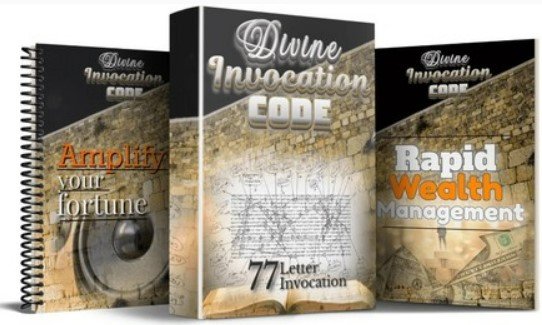
Divine Invocation Code is marketed as a digital program centered on a “77-letter invocation,” a prayer-style recitation claimed to help attract financial abundance, sold alongside two bonus eBooks on money management and wealth-building framed in spiritual terms.
- Price: $67, marked down from a stated “$149” bundle value (third-party sources cite different figures for the same product)
- Format: Digital download, delivered after ClickBank checkout
- Regulatory Status: The seller’s own site classifies the content as being “for entertainment purposes only,” with “all names are pen names”
What’s Included in Divine Invocation Code
Based on the official site, the bundle includes:
- The 77-Letter Invocation – the core paid content, not described in further detail on the page itself
- Bonus: Rapid Wealth Management – an eBook on avoiding common money-management mistakes
- Bonus: Amplify Your Fortune – an eBook framing wealth-building as a “spiritual awakening,” referencing the biblical parable of the talents
The page spends more space on emotionally framed bonus descriptions and biblical references than on describing what the core 77-letter invocation actually is or how it’s delivered.
How Divine Invocation Code Is Marketed to Work
The core premise is that reciting a specific 77-letter invocation connects the user to “divine force” in a way that attracts financial abundance, paired with the two bonus guides meant to help retain that wealth once attracted.
Marketed framing includes:
- A Specific, Undefined Ritual: The “77-letter invocation” is referenced repeatedly but never explained in detail on the public page itself.
- Borrowed Religious Authority: Third-party marketing attributes the invocation’s origin to Kabbalah and Hebrew mystical tradition, a claim that borrows the credibility of a real religious tradition without any sourcing.
- Loss-Aversion Framing: The bonus content leans on the statistic that a majority of lottery winners end up worse off financially, a commonly repeated but loosely sourced claim, to justify why the wealth-management bonuses are “essential.”
As with the other prayer-themed product covered in this series, the sincerity of prayer and faith is outside the scope of what a product review can evaluate. What can be evaluated is that the specific mechanism (a “77-letter invocation”) is never actually detailed publicly, and the page’s own disclaimer confirms none of the names attached to it are real.
Divine Invocation Code: What’s Claimed as Benefits
Based on the official marketing, the stated benefits are:
- Simple, Short Practice – marketed as requiring only a brief daily recitation
- Bonus Financial Guides – two included eBooks on money management and wealth-building
- Long Guarantee Window – a stated 120-day refund period
- Broad Applicability – marketed as affecting “every area” of the buyer’s life, not just finances
Divine Invocation Code Cons
Before buying, there are real considerations worth weighing.
- Self-Disclosed “Entertainment” Classification: the seller’s own footer states the content is for entertainment purposes only and that all names are pen names, an important framing to know upfront.
- Unsourced Religious Attribution: third-party marketing claims the invocation is a Kabbalah/Hebrew mystical secret, a specific claim about a real tradition with no verification offered.
- Inconsistent Pricing Across Sources: different third-party descriptions of the same product cite different original prices and bonus values.
- Mass-Duplicated Promotional Content: the same review text appears verbatim across at least five separate posts and multiple unrelated institutional file uploads, a strong sign of spam-generated content rather than independent assessment.
- Unverifiable Track Record Claim: “over 12,700 individuals” is a specific-sounding number with no source to check it against.
Is Divine Invocation Code a Scam?
Separating the commercial marketing from the subject of faith itself: what’s verifiable is that this is a real, purchasable digital product sold through ClickBank’s standardized checkout, and the seller’s own site is unusually direct that it should be read as entertainment rather than a factual claim.
Caution signs worth weighing:
- The seller’s own disclaimer classifies the content as entertainment with pen-name authorship
- The central mechanism is never actually explained on the public page
- An unsourced religious-authenticity claim (Kabbalah/Hebrew tradition) is used in third-party marketing
- Heavily duplicated promotional content across unrelated platforms
Legitimacy signals worth weighing the other way:
- Checkout runs through ClickBank’s standardized refund system
- A genuinely long, 120-day guarantee is stated
- The seller discloses its entertainment framing rather than hiding it entirely
My take: the seller’s own “entertainment purposes only, all names are pen names” disclaimer is the single most important thing to know here, and it applies regardless of your own relationship to prayer or faith. Treat the wealth-attraction claims as marketing, not a factual mechanism, and keep that 120-day guarantee in writing if you decide to try it.
Conclusion
Looking at Divine Invocation Code overall, it’s a real, purchasable digital product sold through a standard ClickBank checkout, one that its own seller explicitly frames as entertainment with pseudonymous authorship, a notably direct admission compared to most products in this category.
Its most significant issue isn’t necessarily fraud, it’s the gap between spiritually framed marketing claims (an ancient Kabbalah secret, over 12,700 transformed lives) and what the seller’s own disclaimer actually confirms about the content’s nature.
Before you buy, weigh the seller’s own “entertainment purposes only” framing seriously, and don’t treat unsourced claims about a real religious tradition’s secret techniques as verified fact just because they’re wrapped in genuine scripture.