
About Kinetic Power System Official Website
We looked into kineticpowersystem.com for several indicators, and this is one of the more important cases in this review series to walk through carefully, mostly because of what the seller’s own fine print admits.
The domain itself is about six years old, registered in 2020, and comes back “very likely safe” from a third-party scanner, with a valid SSL certificate and no phishing or malware flags. WHOIS ownership is hidden through a privacy service. What matters more here is the sales page’s own legal disclaimer: it states outright that “Chad Becker,” the firefighter presented as the product’s creator with a dramatic personal origin story, is a pseudonym used by the company’s writers, and that “the story and presentation are created strictly for promotional purposes only.” That is a direct, self-admitted acknowledgment that the creator’s identity and backstory are fictional, not something we had to infer. Checkout runs through a mix of processors including ClickBank, Digistore24, and BuyGoods, backing a stated 60-day money-back guarantee.
| Positive Reviews | Negative Reviews |
|---|---|
| ClickBank and similar processors provide a real, independent refund and dispute mechanism | The seller’s own disclaimer admits the named creator, “Chad Becker,” is a fictional pseudonym invented for promotional purposes |
| Flywheel-based energy storage is a real, legitimate engineering concept used in real-world applications | The sales page’s own disclaimer also states the device “was not technically assessed,” meaning no independent testing backs the specific savings claims |
| A 60-day guarantee is stated across multiple versions of the sales funnel | Specific savings figures (“62% reduction,” “$1,250-$2,400 annually”) are unverified promotional claims with no independent data behind them |
| Low $49 promotional price limits the financial risk of trying the plans | Multiple near-identical mirror domains sell the same product under different names, a pattern typical of affiliate funnel networks |
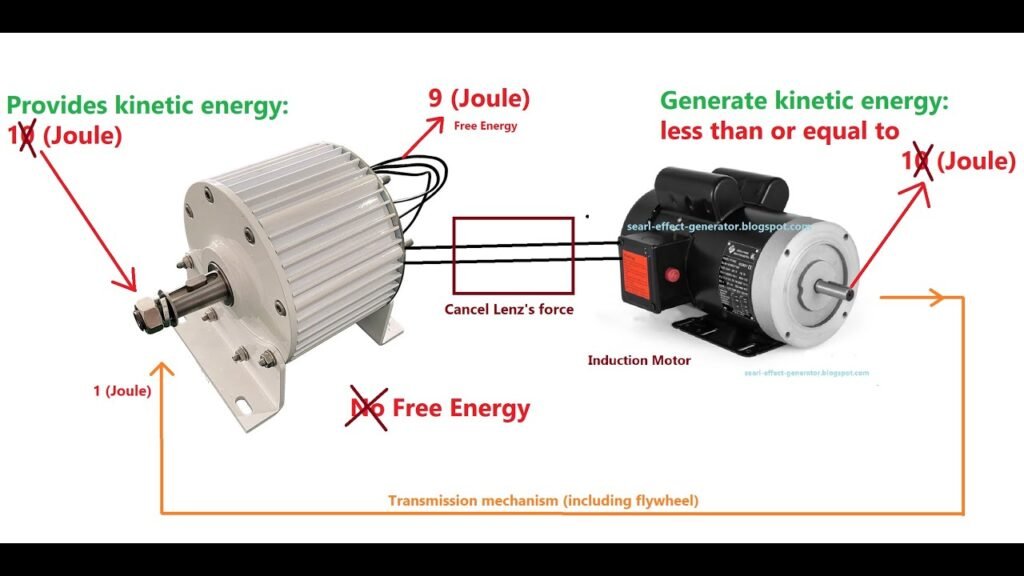
Kinetic Power System is a digital guide teaching buyers to build a DIY, flywheel-based device from roughly $208 of hardware-store parts, marketed as a way to capture motion and meaningfully reduce a household’s electric bill. Flywheels are a genuine, well-established engineering technology, but it is important to be precise about what they actually do: a flywheel stores energy that has already been put into it, it does not generate new energy out of nothing. Any device claimed to meaningfully power household appliances from ambient or human motion alone, without a comparable energy input from somewhere else, runs up against the basic physical principle of conservation of energy, and buyers should weigh the marketing’s savings claims against that fact.
Beyond the physics, the more directly verifiable issue is the seller’s own admission that its named creator is not a real person, just a pseudonym invented for the sales story. Combined with a disclaimer stating the device itself was never independently tested, that is what leads people to ask: is Kinetic Power System legit?
What is Kinetic Power System?
Kinetic Power System is a digital, downloadable guide that provides instructions for building a DIY flywheel-based energy device from commonly available hardware-store parts, marketed as a way to reduce household electricity costs.
- Key Features: Step-by-step build instructions for a flywheel-based device, using roughly $208 in parts according to the sales materials
- Format: Digital download (guide/blueprint), not a physical kit or pre-built device
- Regulatory Status: Sold as an informational DIY guide; the seller’s own disclaimer states the device “was not technically assessed,” meaning its energy-saving performance has not been independently verified or certified
Key Features of Kinetic Power System
- Flywheel-based build plans – step-by-step instructions for assembling a motion-capture device from basic hardware parts
- Low stated build cost – approximately $208 in parts according to the sales materials
- 60-day money-back guarantee – offered across the sales funnel’s various processor pages
- Digital delivery – instant access to the guide after purchase, no physical shipping
How Kinetic Power System Claims to Work
Key mechanisms described include:
- Capturing kinetic (motion) energy through a flywheel mechanism
- Storing that captured energy for household use
- Reducing reliance on grid electricity and lowering monthly bills as a result
Flywheels are a real and legitimate way to store mechanical energy, used in genuine industrial and engineering applications, so the underlying component is not invented from nothing. The physics concern is specifically about the scale of the claimed benefit: a flywheel can only release energy that was put into it in the first place, whether from an electric motor, human effort, or another power source, and it cannot generate more usable energy than went in. Any marketing suggesting a simple home-built device can meaningfully replace a significant portion of grid electricity from ambient motion alone should be weighed against that basic limitation, especially since the seller’s own disclaimer confirms the device has not been independently tested.
Kinetic Power System Benefits
- Real payment processors – ClickBank, Digistore24, and BuyGoods all provide independent dispute and refund mechanisms
- Low financial risk – a $49 promotional price and stated 60-day guarantee limit what is actually at stake
- Grounded core component – flywheel energy storage is a legitimate, real-world engineering concept, unlike a purely fictional mechanism
- Immediate digital access – the guide is available right after purchase with no shipping wait
Kinetic Power System Cons
- The sales page’s own legal disclaimer admits the named creator, “Chad Becker,” is a fictional pseudonym, not a real firefighter or inventor
- The same disclaimer states the device “was not technically assessed,” meaning no independent testing supports its specific energy-saving claims
- Specific savings figures cited in marketing lack any independent verification
- The core premise, meaningfully powering a household from captured motion alone, runs against the basic physics of energy conservation as commonly marketed
- Multiple near-identical mirror domains sell the same product, a pattern typical of affiliate funnel networks rather than one accountable brand
- No independent reviews, scientific assessments, or consumer-protection findings specific to this product could be located
Is Kinetic Power System a Scam?
Kinetic Power System is sold through real, established payment processors with a stated refund window, and its core mechanism, a flywheel, is a legitimate engineering concept rather than something entirely fictional. That gives it a basic technical foundation to work from.
What deserves serious weight here is what the seller discloses about itself:
- Its own fine print confirms the named creator and origin story are fictional, invented purely for marketing
- Its own fine print also confirms the device was never independently tested
- The savings claims made in the marketing go well beyond what a flywheel, which only stores energy already put into it, can be expected to deliver from ambient motion alone
My verdict: when a seller’s own disclaimer admits its creator story is fictional and its product was never independently tested, those are facts worth taking very seriously on their own, regardless of any interpretation of the underlying physics. Readers should weigh the specific energy-saving claims against the basic principle that a flywheel cannot generate more energy than is put into it, and should treat the marketing’s dramatic savings figures as unverified promotional claims rather than tested results.
Conclusion
Kinetic Power System is a DIY flywheel-based energy guide sold under a fictional creator persona that the seller’s own disclaimer openly admits, alongside an admission that the device itself was never independently tested. It is backed by a real payment processor and a 60-day guarantee, but the marketing’s specific savings figures have no independent verification behind them.
If you are still considering this product, read the seller’s own disclaimers carefully before buying, treat every specific savings figure as an unverified promotional claim, and remember that a flywheel can only release energy already put into it, not generate new energy from nothing, when weighing whether the described device could plausibly deliver the results advertised.