About BlastProof David’s Shield Official Website
We scanned blackoutusa.com for several indicators, and the page itself contains some of the most direct, visible evidence of unedited template reuse found anywhere in this review series.
The live page includes full pricing-tier popups built for a bottled supplement, “2 Boxes for Only $49 Each,” “Buy 5 & get 2 free,” language recommending you “use {domain} for at least 2 months,” on a book about off-grid survival, not a supplement. One of the page’s own popup images is literally labeled “ingredients,” despite the product being a written guide. Several images are hotlinked directly from prostabiome.com, an unrelated supplement brand’s server, the same outside domain found contaminating a different survival guide reviewed elsewhere in this series. Most directly, the visible page text contains unrendered template placeholders exactly as written in the code, “{domain} provides educational information” and “For Product Support, please contact us: {support}”, meaning nobody replaced these fields with actual values before the page went live.
On a more transparent note, the page’s disclaimer directly states that “Henry Morris is a pen name,” and independent affiliate-network data confirms this product is sold through the same publisher network as Backyard Liberty, a survival guide reviewed elsewhere in this series with a similar honest pen-name disclosure. The page’s legal footer also stacks four different retailer names in the same document: ClickBank, JVZoo, BuyGoods (in both English and a duplicated Arabic translation), and Digistore24.
| Positive Reviews | Negative Reviews |
|---|---|
| Explicitly discloses that “Henry Morris” is a pen name, rather than obscuring it | Live page contains raw, unrendered template code (“{domain}”, “{support}”) visible in the actual page text |
| Confirmed to be part of the same established publisher network as another survival guide reviewed elsewhere in this series | Contains leftover supplement-funnel popups (“2 Boxes for $49 Each,” an “ingredients” image) entirely unrelated to a book product |
| Checkout runs through ClickBank, giving buyers standardized refund protection | Images are hotlinked directly from an unrelated supplement brand’s server, and four different retailer names are stacked in one legal footer |
I’ve reviewed a lot of survival and prepper guides in this series, and BlastProof: David’s Shield has some of the clearest, most directly visible evidence of careless template reuse I’ve come across, including raw, unrendered placeholder code sitting in the live page text and a supplement “ingredients” popup on a book. Before trusting the specific content claims, it’s worth understanding just how hastily this particular page was assembled.
Is BlastProof David’s Shield legit? This analysis looks at what the guide claims to teach, the direct evidence of sloppy page construction, and what independent reviews say about the actual content.
What is BlastProof David’s Shield?
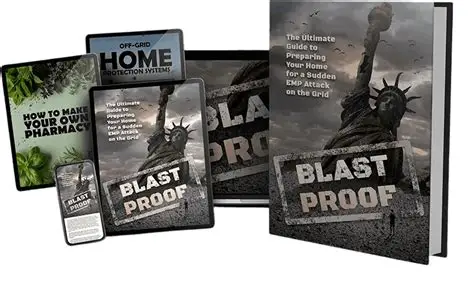
BlastProof: David’s Shield is a survival guide, available as a hard copy or digital download, teaching low-tech, electricity-independent survival systems modeled on Amish practices and biblical precedent, framed around preparing for an extended grid collapse from an EMP, cyberattack, or infrastructure failure.
- Format: Physical book ($67 + $11.95 shipping) or digital copy ($67, with a $29 discounted digital option also shown)
- Bonuses: “How To Make Your Own Pharmacy” and “Off-Grid Home Protection Systems” guides
- Regulatory Status: Educational/DIY survival guide, not a certified emergency-preparedness product
What’s Inside BlastProof David’s Shield
Based on independent third-party coverage, the guide centers on:
- Low-Tech Survival Systems – food, water, heat, medicine, and home security methods that don’t depend on electricity or high-cost gear
- Amish-Inspired Practices – pre-industrial living knowledge applied to modern grid-down scenarios
- Biblical Framing – drawing on figures like Noah, Joseph, and David as preparedness precedents
- Bonus Guides – a home pharmacy guide and off-grid home protection systems guide
One independent reviewer characterized the core philosophy as “knowledge over gear,” emphasizing repeatable low-tech systems rather than expensive equipment lists, a reasonably grounded general approach to off-grid preparedness, separate from the sales page’s own construction issues.
How BlastProof David’s Shield Is Marketed to Work
The guide argues that modern survival planning over-relies on electricity and technology, framing the grid itself as a single point of failure, and that historical, low-tech methods (in use well before electrification) remain viable and teachable today.
This general premise, that pre-industrial and low-tech skills remain useful in a genuine extended power outage, is reasonable and shared by many mainstream emergency-preparedness resources, it isn’t a fabricated concept. What can’t be verified from the sales page is how detailed or actionable the specific instructions are, since the page itself is built around video and popup-driven sales mechanics rather than a clear breakdown of contents.
BlastProof David’s Shield: What’s Claimed as Benefits
Based on the official site and independent coverage, the stated benefits are:
- Low-Cost, Repeatable Systems – positioned as an alternative to expensive gear-based prepping
- Faith-Based Framing – appeals specifically to readers looking for preparedness content grounded in Christian belief
- Bundled Bonus Guides – a home pharmacy guide and home protection guide included
- Available in Physical or Digital Format – flexibility for different reading preferences
BlastProof David’s Shield Cons
Before buying, there are real concerns worth weighing.
- Visible Raw Template Code: the live page displays unrendered placeholders (“{domain}”, “{support}”) instead of actual site information, a direct, checkable sign of an unfinished or carelessly deployed page.
- Leftover Supplement Funnel Elements: bottle-pricing popups and an “ingredients” image, both built for a completely different type of product, remain unedited on this book’s sales page.
- Cross-Domain Image Hotlinking: several images load directly from an unrelated supplement brand’s server rather than this site’s own.
- Four Stacked Retailer Disclaimers: ClickBank, JVZoo, BuyGoods, and Digistore24 all appear as “the retailer” in the same legal footer.
- Heavy Fear-Based Urgency: framing around “the AI Beast” and imminent collapse is designed to create urgency, a common tactic across this product category.
Is BlastProof David’s Shield a Scam?
The underlying survival content, based on independent, non-affiliated coverage, appears to be a reasonably grounded, low-tech preparedness approach, not a fabricated concept, and the product is sold through an established publisher network shared with another guide reviewed elsewhere in this series.
What’s worth weighing heavily before buying:
- The live sales page contains direct, visible evidence of unfinished template construction, including raw placeholder code and entirely unrelated supplement-funnel elements
- The pen name is disclosed directly, a genuine transparency positive
- Independent, non-affiliate coverage of the actual content is reasonably measured rather than alarmist
- Checkout runs through ClickBank’s standardized system regardless of which stacked retailer name appears in the footer
My verdict: the sloppy page construction here is a real red flag worth taking seriously, it suggests minimal quality control went into this specific funnel, but it doesn’t necessarily mean the underlying book content is fabricated, especially given independent, non-affiliate coverage describing genuinely applicable low-tech preparedness information.
Conclusion
Looking at BlastProof: David’s Shield overall, the underlying subject matter, low-tech, electricity-independent preparedness knowledge, is a legitimate and reasonably well-covered topic in mainstream emergency-preparedness content, not an invented premise.
What should give any buyer real pause is the sales page itself: visible unrendered template code, a supplement-funnel “ingredients” popup left on a book’s page, and four different retailer names stacked in one footer are about as clear a sign of a hastily assembled, poorly maintained funnel as you’ll find in this category.
Before buying, weigh the disclosed pen name and the product’s real publisher-network standing against just how little quality control clearly went into this specific page, and consider that a $67 book with this level of sales-page neglect deserves extra scrutiny of its actual contents before you commit.