About MindQuell Official Website
We scanned themindquell.com for several indicators, and the most significant finding is a direct match to a different product reviewed elsewhere in this series.
MindQuell’s nine listed ingredients, Moringa, Pine Bark Extract, Ginkgo Biloba, Tamarind, Lion’s Mane Mushroom, Chlorella, Bacopa monnieri, Spirulina, and Neem, are the exact same nine ingredients, in the same combination, found in JointVive, a joint and mobility supplement reviewed separately in this series. The two products are marketed for entirely different purposes (memory support here, joint mobility there) using what appears to be the identical base formula. The page’s own metadata also credits the same author name, “Paras Kalra,” found on JointVive’s page, and uses the identical search-blocking directive (“noimageindex, nofollow, nosnippet”) found there too, strong evidence both products come from the same operator reusing shared infrastructure and formulas across different marketed conditions. A domain typo also appears in the page’s own metadata (“themindquelll.com,” with three L’s, instead of the actual “themindquell.com”), another sign of hastily copied template code.
The page does cite five scientific references, a genuine positive, but four of the five are about melatonin and sleep’s effect on cognitive decline, a topic that doesn’t connect to any of the nine listed ingredients. Only one reference, on tamarind, actually relates to something in the formula.
| Positive Reviews | Negative Reviews |
|---|---|
| Cites five specific scientific references, more than many products in this category | The exact same nine-ingredient formula is sold under a different brand name for an entirely different condition (JointVive, for joint health) |
| 365-day money-back guarantee is a genuinely long refund window | Four of the five cited references are about melatonin and sleep, unrelated to any of MindQuell’s actual listed ingredients |
| GMP-certified manufacturing claim is a standard, verifiable industry practice | The page’s own metadata contains a domain typo and blocks search engines from indexing it |
I’ve reviewed a lot of memory and cognitive-support supplements, and MindQuell is a clear example of a pattern seen elsewhere in this series: the same base ingredient formula sold under different branding for different marketed purposes. Before trusting the specific memory claims here, it’s worth understanding that this exact formula is being sold elsewhere for an unrelated condition.
Is MindQuell legit? This analysis looks at the ingredients, how they connect (or don’t) to the product’s own citations, and what the JointVive match tells you.
What is MindQuell?
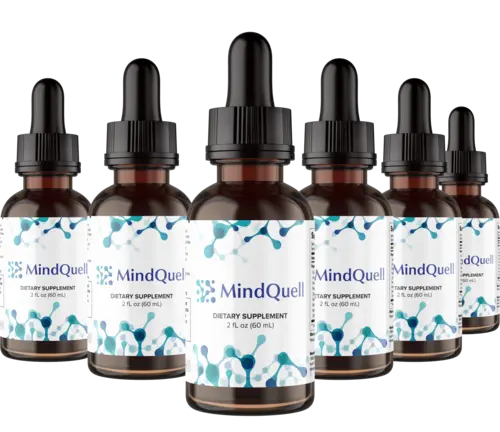
MindQuell is a liquid supplement (taken as drops) marketed to support memory function, built around a nine-ingredient natural formula.
- Format: Liquid drops, one per day
- Price: $59/bottle (2-bottle trial) down to $39/bottle on the 6-bottle package
- Regulatory Status: Dietary supplement, not FDA-approved as a medication
Key Ingredients Used in MindQuell
The official site names nine ingredients:
- Moringa – commonly marketed for general antioxidant and anti-inflammatory support
- Pine Bark Extract – studied for antioxidant properties and circulatory support
- Ginkgo Biloba – among the more researched herbs for cognitive and circulatory support
- Tamarind – the one ingredient with a directly relevant citation on this page, referencing anti-cognitive-decline research
- Lion’s Mane Mushroom – studied for cognitive and nerve health support
- Chlorella – an algae commonly marketed for general nutrition and detoxification
- Bacopa monnieri – one of the more established herbs studied specifically for memory function
- Spirulina – an algae commonly marketed for antioxidant support
- Neem – traditionally used for anti-inflammatory and skin health purposes
Several of these (Ginkgo Biloba, Bacopa monnieri, Lion’s Mane) are genuinely among the more studied ingredients for cognitive support specifically, a reasonable formula direction for a memory product. What undercuts confidence is that this identical nine-ingredient combination is marketed elsewhere in this series as a joint-health formula, suggesting the ingredient list wasn’t necessarily assembled specifically around memory support research.
How MindQuell Is Marketed to Work
The page frames the nine ingredients as working together to “support memory function,” a broadly worded claim that doesn’t specify a particular mechanism.
Worth noting: the scientific references provided don’t actually back this framing well. Four of the five citations concern melatonin and sleep’s relationship to cognitive decline, melatonin isn’t listed as an ingredient in MindQuell at all, making these citations disconnected from the actual product. Only the tamarind citation, a real study in RSC Advances on Tamarindus indica’s effects on cognitive decline, directly supports one of the nine listed ingredients.
MindQuell: What’s Claimed as Benefits
Based on the official site, the stated benefits are:
- Memory Function Support – the central marketed claim
- Natural, Stimulant-Free Formula – no reported synthetic additives
- Easy Dosing – one drop per day
- Long Refund Window – 365 days, longer than most competitors
- GMP-Certified Manufacturing – a standard quality-control signal
MindQuell Cons
Before buying, there are a few real considerations worth weighing.
- Identical Formula Sold for a Different Condition: the same nine ingredients are marketed elsewhere as a joint-health supplement, raising questions about whether the formula was actually designed around memory-specific research.
- Mismatched Citations: four of five scientific references concern melatonin and sleep, an ingredient and topic not present anywhere in MindQuell’s actual formula.
- Search Engines Blocked: the page’s own settings prevent indexing of its images and following of its links.
- Domain Typo in Metadata: the page’s own metadata references a differently spelled, non-existent domain, evidence of a hastily copied template.
- No Finished-Product Clinical Trial: individual ingredients have some research behind them, but there’s no published trial on the MindQuell formula itself.
Is MindQuell a Scam?
MindQuell’s core ingredients include some genuinely studied cognitive-support herbs (Ginkgo Biloba, Bacopa monnieri, Lion’s Mane), a real positive for a memory-focused product.
What’s worth weighing before buying:
- The formula is identical to a differently branded joint-health product reviewed elsewhere in this series, suggesting shared, generic formulation rather than memory-specific development
- Most of the page’s cited research doesn’t actually relate to the listed ingredients
- The manufacturer’s search-blocking settings and metadata errors point to the same low-effort template pattern found on the related sibling product
- A 365-day guarantee is a genuine, generous positive if you decide to try it
If you’re considering MindQuell specifically for memory support, know that you’re likely purchasing the same base formula sold elsewhere for joint health, and that most of the page’s own citations don’t actually support its memory claims.
Conclusion
Looking at MindQuell overall, it draws on some ingredients with real cognitive-support research behind them, but the evidence strongly suggests this is a generic formula repackaged under different branding for different conditions, the same nine ingredients, the same author metadata, and the same search-blocking settings all match a joint-health product reviewed separately in this series.
Its citation list, while more extensive than many competitors, mostly doesn’t connect to what’s actually in the bottle.
Before buying specifically for memory support, weigh that this formula isn’t uniquely developed for that purpose, and rely on the 365-day guarantee if the results don’t meet expectations.