
About Parkinson Disease Protocol Official Website
We scanned blueheronhealthnews.com for this product, and given that it concerns a serious, progressive neurological disease, this review needs to lead with medical accuracy rather than the usual funnel-analysis details.
The page describes a personal account of essentially reversing Parkinson’s disease through 12 lifestyle habits, claiming symptoms “melted away in days,” describing near-complete symptom remission, and stating the author expects to never progress beyond the earliest disease stage for the rest of a natural lifespan. Currently, there is no known cure for Parkinson’s disease, and no lifestyle intervention, natural or otherwise, has been established in mainstream neurology as capable of halting or reversing the underlying loss of dopamine-producing neurons in the substantia nigra. The disease’s progressive, degenerative nature is not something current medical science, or credible alternative approaches, can reliably stop through diet and habit changes alone.
The bigger concern is the page’s framing throughout: it repeatedly characterizes standard medical treatment (dopamine-replacement medication) as an inferior “easy way out” that patients choose because they don’t want to put in effort, contrasted against the guide’s “real” solution. While the page never explicitly instructs readers to stop taking prescribed medication, this framing could reasonably lead someone to reduce or discontinue their treatment in favor of this program. That would be genuinely dangerous. Abruptly stopping or reducing Parkinson’s medication (particularly levodopa) without a neurologist’s direct guidance carries real risk of severe symptom rebound and, in rare cases, a serious medical complication called neuroleptic malignant-like syndrome (sometimes called Parkinsonism-hyperpyrexia syndrome). This is a genuine safety concern, not a hypothetical one.
| Positive Reviews | Negative Reviews |
|---|---|
| Correctly describes some real, basic neuroscience (substantia nigra cell loss and reduced dopamine as the underlying process in Parkinson’s) | Claims symptom reversal and effectively halted disease progression that isn’t supported by current mainstream neurology |
| Checkout runs through ClickBank, giving buyers standardized refund protection | Frames standard medical treatment as an inferior choice, risking readers reducing or stopping necessary medication without medical guidance |
| Encourages exercise and stress reduction, both genuinely studied as supportive for Parkinson’s symptom management | References “sparkling scientific credentials” and “researched knowledge” with zero specific studies, citations, or named sources anywhere on the page |
Given how serious Parkinson’s disease is, this review is going to depart from the usual format to focus on the medical accuracy of what’s being claimed, rather than a typical marketing-tactics breakdown.
Is Parkinson Disease Protocol legit? This analysis centers on what mainstream neurology actually knows about this disease and why the specific claims made here deserve real medical caution.
What is Parkinson Disease Protocol?
Parkinson Disease Protocol (marketed as “The Parkinson’s Protocol”) is a digital guide presenting 12 lifestyle habits attributed to a practitioner named Jodi Knapp, claimed to address inflammation, environmental toxin exposure, and stress in order to halt neurodegeneration and reverse Parkinson’s symptoms.
- Format: Digital guide with 12 habit-based steps
- Price: Not shown on the page we accessed
- Regulatory Status: Not a licensed medical treatment; the underlying publisher’s other guides include a standard disclaimer directing readers to their physician for health issues
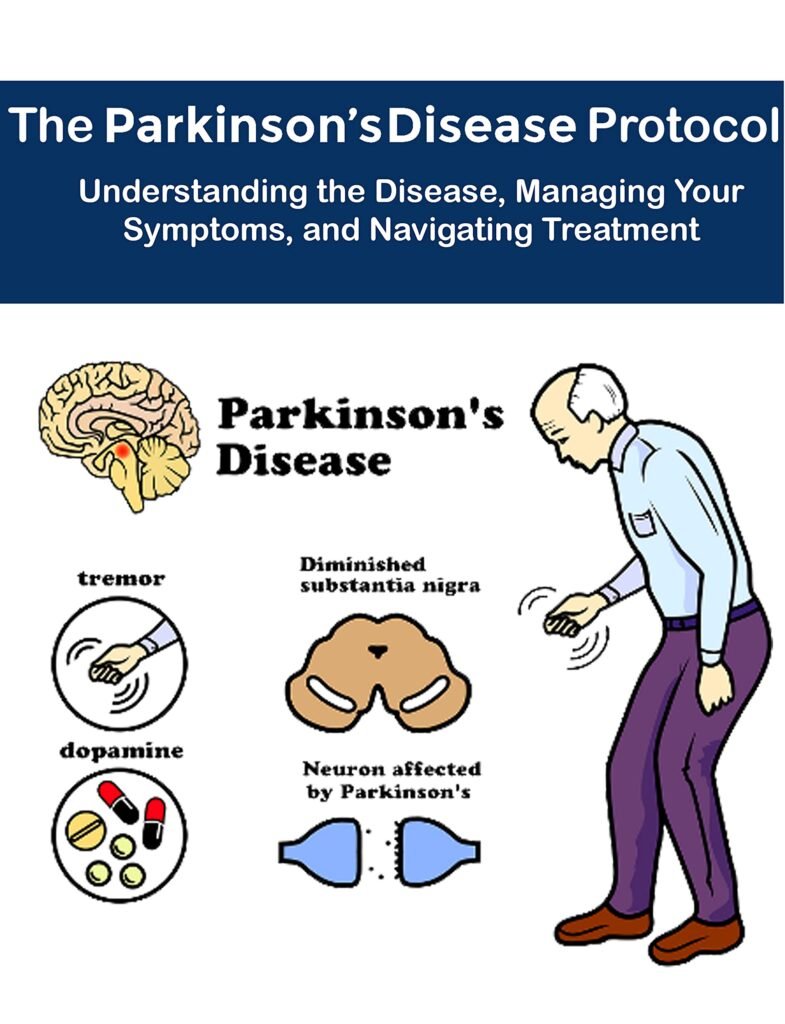
What’s Inside Parkinson Disease Protocol
Based on the official site, the program addresses three named factors in detail:
- Inflammation – framed as a driver of substantia nigra cell death
- Environmental Toxins – framed as doubling the risk of degenerative brain disease
- Low Mood and Stress – framed as both a symptom and a driver of further decline
- 12 Total Habits – only three of the eight underlying “causes” are described in detail on the page itself
Chronic inflammation and environmental exposures are genuinely studied areas in Parkinson’s research, current neuroscience does investigate their potential roles in neurodegeneration, so the general topics aren’t fabricated. What goes well beyond established science is the claim that addressing these factors through a home lifestyle program reliably halts or reverses the neuron loss already in progress. No named practitioner, however experienced, has published findings establishing this in peer-reviewed neurology literature as far as we could determine, and none are cited anywhere on the page.
How Parkinson Disease Protocol Is Marketed to Work
The program claims that by addressing inflammation, toxin exposure, and stress, the remaining healthy substantia nigra cells (the page cites roughly 20% remaining at diagnosis) can be preserved indefinitely, effectively freezing disease progression at its earliest stage.
The claim that significant dopaminergic neuron loss occurs before symptoms become noticeable is accurate and reflects real Parkinson’s research. What isn’t established is that any intervention, this program included, can reliably preserve the remaining cells and halt progression long-term. Neuroprotection in Parkinson’s disease is an active, serious area of ongoing medical research precisely because no treatment, pharmaceutical or lifestyle-based, has yet been proven to reliably stop the underlying degenerative process. Presenting this as a solved problem, achievable through a home program, misrepresents where the actual science currently stands.
Parkinson Disease Protocol: What’s Claimed as Benefits
Based on the official site, the stated benefits are:
- Halted Disease Progression – a claim not supported by established neurology
- Reversed Symptoms – tremor, sleep issues, and memory problems described as resolved
- No Cost Beyond the Guide – framed as requiring no ongoing medical spending
- Simple, Gradual Habit Changes – introduced one at a time over several weeks
Parkinson Disease Protocol Cons
Given the seriousness of this disease, these go beyond typical marketing concerns.
- Claims Not Supported by Current Neurology: no lifestyle intervention has been established as capable of halting or reversing Parkinson’s neurodegeneration.
- Framing That Could Discourage Necessary Medication Use: characterizing standard treatment as an inferior, effort-avoidant choice risks readers reducing or stopping medication without medical guidance, which carries real, serious risk.
- Unverifiable Practitioner: “Jodi Knapp” has no checkable credentials, license, or institutional affiliation given anywhere on the page.
- No Actual Citations: despite repeated references to “sparkling scientific credentials,” no specific studies, researchers, or institutions are named.
- Oversimplified Disease Model: framing Parkinson’s as fully explainable and reversible through 8 addressable factors doesn’t reflect the genuinely complex, only partially understood nature of the disease’s underlying causes.
Is Parkinson Disease Protocol a Scam?
Setting aside standard sales-page tactics, the central concern here is medical, not financial.
What’s essential to understand:
- There is currently no cure for Parkinson’s disease, and no natural or lifestyle-based method has been established as capable of reversing its progression
- Exercise, stress management, and anti-inflammatory dietary patterns do have genuine, real research support as helpful complements to standard treatment, worth discussing with your neurologist, but this is different from the guide’s claim of halting or reversing the disease itself
- Never reduce or stop prescribed Parkinson’s medication based on this or any similar guide without your neurologist’s direct involvement; doing so carries real risk of severe symptom rebound
- If you or someone you love has Parkinson’s, continue working with a neurologist, and feel free to discuss lifestyle approaches with them as a complement to, not a replacement for, your treatment plan
Conclusion
Looking at Parkinson Disease Protocol overall, it makes claims about reversing a serious, progressive neurological disease that go well beyond what current medical science supports, and its framing of standard medical treatment as an inferior choice carries real risk if it leads anyone to alter their prescribed care without medical guidance.
If you have Parkinson’s disease, please continue working closely with your neurologist. Lifestyle factors like exercise and stress management are genuinely worth discussing as part of your overall care, but no guide, this one included, should be treated as a substitute for your prescribed treatment or a reason to stop it on your own.