About Pharaoh’s Nectar Official Website
We scanned pharaohsnectar.com directly. It’s a liquid supplement sold through ClickBank, built around five named ingredients: Egyptian Blue Vervain, Eleuthero Root, Lady’s Mantle Herb, Sacred Licorice Root, and Pure Peppermint Oil, with a genuinely topic-relevant, if narrow, set of five scientific references covering some of these ingredients individually.
The gap here isn’t fabricated citations, it’s a mismatch between what those citations actually study and how the product is marketed. The references cover eleuthero as a general adaptogen, peppermint oil’s digestive uses, and licorice’s effect on body fat, real, reasonably mainstream herbal research. The marketing, though, frames the product around “manifesting your ideal self” and reaching a “higher state of alignment,” language the cited research doesn’t address at all. It’s a case of real science studying ordinary herbal effects being used to support a much more abstract, spiritually framed claim.
We also found this product promoted through two separate networks of duplicated, templated content identified earlier in this review series: the “Mike Thomas, Health Specialist” byline via “Health First Offers,” and a series of near-identical, ingredient-by-ingredient posts on a beehiiv newsletter under “Smith Rao,” both patterns previously found promoting several unrelated products in this series. Seeing the same recycled content networks here again reinforces that this is mass-produced promotional content, not independent review coverage.
| Positive Reviews | Negative Reviews |
|---|---|
| Checkout runs through ClickBank, giving buyers standardized refund protection, with a stated 365-day guarantee | The “manifestation” and “alignment” marketing language isn’t supported by the product’s own cited research, which covers ordinary herbal effects |
| The reference list is genuinely relevant to the named ingredients, unlike vaguer citations found elsewhere in this category | The product is promoted through two previously identified templated/duplicated content networks rather than independent reviews |
| Standard supplement disclaimers (FDA statement, doctor consultation) are present | A flash “10% off” popup claims “$330” in savings without a clear calculation matching the listed prices |
I’ve reviewed a lot of supplements in this series, and Pharaoh’s Nectar is a useful example of a product with a genuinely relevant ingredient reference list undermined by marketing language that reaches well beyond what that research supports. The herbal ingredients themselves aren’t the issue, the “manifest your ideal self” framing around them is.
Is Pharaoh’s Nectar legit? This analysis looks at what’s in the formula, how the citations hold up against the marketing, and what to weigh before buying.
What is Pharaoh’s Nectar?
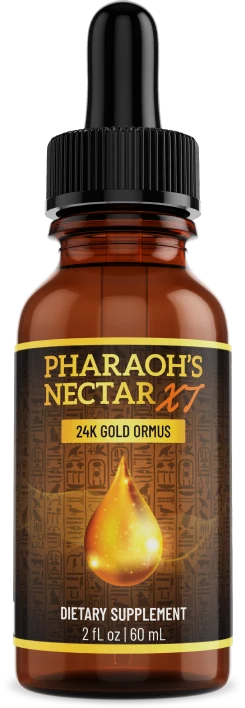
Pharaoh’s Nectar is a liquid herbal supplement marketed to support mental clarity, focus, and a described “higher state of alignment,” framed around ancient Egyptian branding.
- Price: $69 for one bottle, down to $49 per bottle on the 6-bottle option
- Format: Liquid drops, non-GMO, stimulant-free
- Regulatory Status: Dietary supplement, not FDA-approved as a medication
Key Ingredients Used in Pharaoh’s Nectar
The official site names five ingredients:
- Egyptian Blue Vervain – marketed for mental clarity and calming properties, though this specific named variety isn’t independently documented in mainstream botanical research the way the other four ingredients are
- Eleuthero Root – a well-studied adaptogen, with genuine clinical research on stress adaptation, cited accurately on the page
- Lady’s Mantle Herb – supported by a real phytochemical study, though that research focuses on plant compound analysis rather than the cognitive claims made on the sales page
- Sacred Licorice Root – cited research covers licorice flavonoid effects on body fat, not the immune or cognitive claims also made in the marketing
- Pure Peppermint Oil – a well-documented ingredient for digestive comfort, accurately cited
Four of the five ingredients have real, findable research behind them in some capacity. The mismatch is between that research (mostly digestive, stress-adaptive, and body-composition effects) and the marketing’s broader claims about mental clarity, emotional balance, and “manifestation.”
How Pharaoh’s Nectar Is Marketed to Work
The core claim is that this specific blend supports mental alignment and helps the user “manifest” their healthiest self, framed as working synergistically across the five ingredients.
What holds up, and what doesn’t:
- Individual Adaptogen and Digestive Effects: Real, if modest, research supports eleuthero for stress adaptation and peppermint oil for digestive comfort.
- “Synergistic” and “Alignment” Framing: There’s no cited research testing this specific five-ingredient combination, or any research on “alignment” or “manifestation” as a measurable outcome.
- “Bio-Accumulates” Claim: The FAQ states benefits increase the longer you take it because it “bio-accumulates in your system,” a phrase also found in other supplement funnels covered elsewhere in this series, suggesting shared marketing copy across multiple similar products rather than an ingredient-specific pharmacological claim.
The individual herbs have some legitimate general wellness research behind them. The specific packaged claims, particularly the spiritual “manifestation” framing, go well beyond what any of the five cited studies actually test.
Pharaoh’s Nectar: What’s Claimed as Benefits
Based on the official site, the stated benefits are:
- Mental Clarity and Focus – the core marketed purpose
- Stimulant-Free Energy – no reported jitters or crash
- Non-Habit-Forming Formula – consistent across the product description
- 365-Day Guarantee – a notably long refund window
- Free Shipping on Bulk Orders – included with the 6-bottle package
Pharaoh’s Nectar Cons
Before buying, there are real considerations worth weighing.
- Marketing Outpaces Its Own Citations: the “manifestation” and “alignment” framing isn’t addressed by any of the product’s own cited research.
- Duplicated Promotional Content: this product is promoted through two networks of templated, near-identical content previously identified elsewhere in this review series.
- Unclear Savings Math: a promotional popup claims “$330” in savings without a calculation that clearly matches the listed per-bottle prices.
- One Ingredient Not Independently Documented: “Egyptian Blue Vervain” as a specifically named variety isn’t as well-documented in independent botanical sources as the other four ingredients.
- No Finished-Product Clinical Trial: as with most supplements in this category, the individual ingredient research doesn’t extend to the finished formula as a whole.
Is Pharaoh’s Nectar a Scam?
Based on what’s verifiable, Pharaoh’s Nectar is a real, purchasable supplement with named, mostly researchable ingredients, sold through ClickBank’s standard checkout, not a fabricated listing.
Caution signs worth weighing:
- The spiritual “manifestation” marketing isn’t supported by the product’s own cited research
- The promotional content around this product traces to two previously identified duplicated-content networks
- One ingredient isn’t independently well-documented under its specific marketed name
Legitimacy signals worth weighing the other way:
- Four of five ingredients have genuine, findable research behind their general effects
- A 365-day guarantee is a meaningfully long refund window
- Standard, appropriate supplement disclaimers are present on the page
My take: the herbal ingredients themselves are ordinary and mostly well-precedented in general wellness use. Treat the “manifest your ideal self” and “alignment” language as marketing built on top of, not supported by, the product’s own cited science.
Conclusion
Looking at Pharaoh’s Nectar overall, it’s a real supplement with mostly legitimate, if modest, ingredient research behind it, sold through a standard ClickBank checkout with a generous refund window.
Its main issue is a gap between grounded, if narrow, science and much broader spiritual marketing claims layered on top of it, reinforced by promotional content traced to duplicated-content networks rather than independent reviews.
Before you buy, separate the ordinary herbal-supplement claims (stress adaptation, digestive comfort) from the “manifestation” framing, since only the former is backed by the product’s own citations.